







What Does “Compostable” Actually Mean?
“Compostable” gets used loosely in marketing, but it has a precise technical meaning businesses need to understand before making purchasing or labeling decisions.
Compostable vs. Biodegradable vs. Bio-Based: Key Differences
These three words are often used interchangeably, but they mean different things:
- Biodegradable — Not backed by any specific federal standard in the U.S. Almost anything breaks down eventually given enough time, which makes this claim close to meaningless on its own. A plastic bag technically “biodegrades” in a landfill, just over hundreds of years.
- Compostable — Refers to material that breaks down within a defined timeframe under defined conditions, verified against a specific standard.
- Bio-based — Describes what a material is made from (plant starches, sugarcane fiber, etc.), not how it behaves at end of life. A bio-based plastic isn’t automatically compostable, and a compostable product isn’t automatically bio-based.
Industrial Composting vs. Home Composting
Not all compostable packaging can go to the same place:
- Industrially compostable — Engineered to break down in the high-heat, tightly managed conditions of a commercial composting facility. A backyard pile can’t replicate these conditions.
- Home compostable — Certified to break down in a lower-temperature backyard setting. This is a smaller, less common certification category, especially in the U.S.
A package labeled “compostable” without qualification is usually referring to industrial composting only. If a business’s customers don’t have access to an industrial facility, the packaging can functionally behave like ordinary trash once thrown away.
The Certification Standards That Matter
- ASTM D6400 — The U.S. reference standard for industrially compostable plastics and packaging. To meet it, a product must show:
- At least 90% biodegradation of organic carbon into CO₂ within 180 days
- At least 90% disintegration through a 2mm sieve within 84 days
- No negative effect on plant growth in the resulting compost
- Compliance with limits on heavy metals and other regulated substances
- ASTM D6868 — Applies to fiber- or paper-based products combining a plant substrate with a compostable coating.
- BPI (Biodegradable Products Institute) The primary third-party certifier verifying products against these ASTM standards in North America. Independent accredited labs run actual tests; BPI reviews results, issues certification, and licenses use of its mark. Certification must be renewed roughly every three years.
- EN 13432 — The equivalent standard in Europe, with certifiers including TÜV Austria, DIN CERTCO, and Australia’s ABA.
Because ASTM D6400 is now the explicit reference point in California’s statewide plastic packaging law and most other state composability regulations, buying certified products isn’t just an environmental choice; it’s increasingly a legal compliance requirement.
Is Compostable Food Packaging Actually Safe?
This is where it gets complicated: composability and safety are not the same thing. A package can pass a composability test while still raising real safety concerns, most notably around a class of chemicals called PFAS.
The PFAS Problem in “Eco-Friendly” Packaging
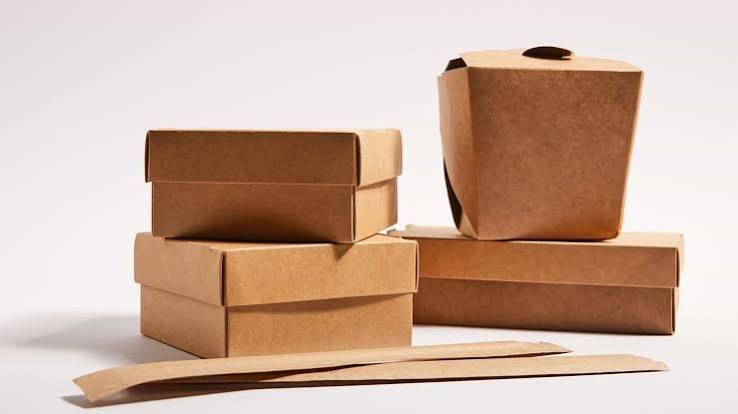
PFAS (per- and polyfluoroalkyl substances) are synthetic chemicals often called “forever chemicals” because they resist breaking down in the environment and the human body. They’re commonly added to fiber-based food packaging for grease- and water-resistance. Exactly the function needed for bowls, wrappers, and takeout containers.
The findings from independent testing are concerning:
- Over 70% of paper, board, and molded-fiber food packaging samples tested across six European countries were found to be intentionally treated with PFAS.
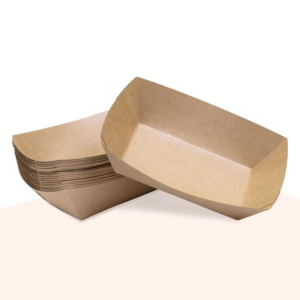
- Molded-fiber compostable containers consistently showed the highest PFAS levels of any packaging category tested, by a full order of magnitude in some cases.
- Fiber-based “compostable” bowls tested in Canada carried PFAS levels three to ten times higher than paper doughnut and pastry bags.
- Finished compost batches containing food-service packaging carried roughly ten times more PFAS than compost without packaging, meaning the chemicals can move from container to compost to soil.
There’s one encouraging data point: when a national regulator capped total organic fluorine in all packaging at 20 parts per million, PFAS content in food packaging dropped immediately and measurably across major fast-food chains. The problem is fixable at the supply-chain level; it just requires deliberate sourcing.
FDA Food-Contact Compliance Is a Separate Question from Composability
A compostable label says nothing about whether a product is legally or chemically safe for direct food contact; that’s a separate regulatory track:
- The FDA doesn’t approve finished compostable containers as a whole product. It regulates the individual food contact substances used in them.
- Materials must either already be recognized as safe under existing regulations, or — for newer engineered materials like many compostable polymers and coatings — go through a Food Contact Notification (FCN) before legally touching food.
- A bowl can be fully certified compostable under ASTM D6400 and still be the wrong choice for direct food contact if its coating, adhesive, or ink hasn’t cleared FDA food-contact review.
Compostability tells a buyer what happens to the packaging after use. FDA compliance tells them whether it’s safe while it’s holding food. Businesses need both boxes checked, not just one.
How Businesses Can Verify a Product Is Genuinely Safe
- Confirm third-party certification (BPI, DIN CERTCO, TÜV, ABA), which now typically requires manufacturer self-declarations that no PFAS was intentionally added, backed by fluorine limits around 100 ppm.
- Ask suppliers to run products through toxicity-screening tools that evaluate underlying material safety, not just end-of-life behavior.
- For food-contact safety specifically, request a migration test report from an accredited lab, referencing applicable federal food-contact regulations, not just a vague “FDA approved” claim, which doesn’t technically apply to whole finished packaging products the way it’s often marketed.
The Real-World Challenges Businesses Should Know About
Even genuinely safe, properly certified compostable packaging runs into practical obstacles once it leaves the warehouse.
Composting Infrastructure Is Still Limited
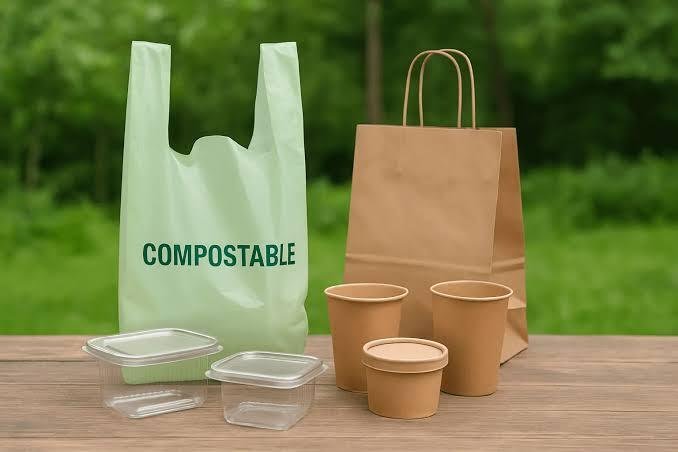
Certified compostable packaging is only as useful as the system that receives it — and that system is still thin across much of the U.S.:
- Fewer than 200 full-scale composting facilities in the country accept food-soiled packaging at all.
- Roughly a third of the sampled U.S. population currently has access to any composting collection program.
- Only around 18% have access to programs that accept compostable packaging specifically, as opposed to just food scraps and yard waste.
In other words, most Americans still can’t put a compostable container anywhere but the trash, regardless of how it’s labeled.
Contamination and Facility Rejection Risk
Composting facilities don’t automatically accept every type of compostable packaging:
- Roughly 7 in 10 surveyed composting facilities now accept some form of compostable food-contact packaging, up sharply from a few years earlier.
- Acceptance varies by material: food-soiled paper and pizza boxes are widely accepted, but molded fiber containers are accepted by fewer than half of facilities, and bioplastic-coated paper by only about a third.
- Many facilities have zero-tolerance contamination policies, because packaging that isn’t properly certified, or gets mixed with non-compostable lookalikes, can compromise an entire batch of compost.
Greenwashing and FTC Green Guides Compliance Risk
There’s a legal dimension beyond the environmental one:
- The FTC’s Green Guides require that any “compostable” claim be backed by competent, reliable scientific evidence.
- The product should be decomposed in a timeframe comparable to what a consumer could reasonably compost themselves.
- An unqualified “compostable” label — without specifying industrial vs. home composting, or when most customers can’t access a facility — is exactly the kind of claim regulator’s target.
- Businesses that overstate compostability expose themselves to regulatory scrutiny and reputational damage when a claim gets publicly challenged.
Is Compostable Packaging Worth It for Your Business?
Once safety and infrastructure are accounted for, the remaining question is financial: does compostable food packaging make business sense, or is it purely an image cost?
Cost Comparison: Compostable vs. Conventional Packaging
- Compostable materials typically carry a higher sticker price than conventional plastic, due to more complex sourcing and production.
- But purchase price is only part of the picture: landfill tipping fees generally run $30–150 per ton, plastic recycling processing adds another $50–200 per ton, while commercial composting fees (where accepted) typically fall in the $40–80 per ton range.
- One documented example: a direct-to-consumer brand switching from cheaper virgin poly mailers to certified compostable mailers saw the added material cost offset within about six weeks, driven by improved repeat-purchase behavior.
Unit price alone understates the real comparison once disposal costs and customer retention are factored in.
Regulatory Trends Pushing Businesses Toward Compostables
- As of 2025, seven U.S. states have passed Extended Producer Responsibility (EPR) packaging laws, shifting waste-management costs and reporting obligations onto producers.
- California’s statewide law requires all single-use plastic packaging sold in-state to be recyclable or compostable by 2032, with compostable claims required to carry a recognized certification mark.
- Washington State has banned expanded polystyrene foodservice products and set formal labeling standards for compostable claims.
- The EU’s Single-Use Plastics Directive bans a range of plastic foodservice items outright.
For businesses operating in these jurisdictions, compostable packaging is increasingly less discretionary and more of a compliance requirement with a countdown clock attached.
Customer Perception and Brand Trust
- Businesses that adopt genuinely certified, well-labeled compostable packaging can build goodwill and differentiate on sustainability.
- The reverse is also true: businesses caught making unsubstantiated compostability claims face real legal and reputational consequences.
- The credibility gained from switching is entirely contingent on getting the certification, sourcing, and labeling right; done poorly, it can generate more skepticism than the plastic packaging it replaced.
Best Practices for Businesses Adopting Compostable Packaging
Choosing Certified, PFAS-Free Suppliers
- Require third-party certification (BPI, TÜV, DIN CERTCO, or ABA, depending on market) rather than accepting a supplier’s self-reported claim.
- Ask specifically for PFAS-free confirmation and underlying toxicity data, not just an end-of-life disintegration test.
- For anything touching food directly, request migration test reports from an accredited lab referencing applicable food-contact regulations.
Labeling and Marketing Claims the Right Way
- State clearly whether a product is industrially compostable or home compostable.
- Avoid unqualified use of “compostable” if most customers don’t have access to a facility that will accept it.
- Skip vague, undefined terms like “eco-friendly” or “green” on their own.
- Be prepared to substantiate every claim with underlying test data if asked.
Partnering With Local Composting Facilities
- Confirm local composting infrastructure will accept the specific material chosen — acceptance rates vary widely by material type.
- Look into industry-funded grant programs and collection-expansion initiatives, which have already extended organics-collection access to hundreds of thousands of U.S. households.
- Consider local partnerships or pilot programs to either build demand for expanded collection or route packaging waste to facilities that already accept it.
Frequently Asked Questions
Ready to Make the Switch with Confidence?
Compostable food packaging can be a genuinely safer, lower-impact choice, but only when it’s backed by real certification, verified PFAS-free sourcing, and a disposal system that can process it.
Before you commit to a supplier or update your packaging claims, take stock of your local composting infrastructure, ask your suppliers for the documentation that matters, and make sure your labeling matches what your customers can realistically do with the packaging once they’re done with it.
Get this right, and compostable packaging becomes a real business advantage, not just a line on a label.